
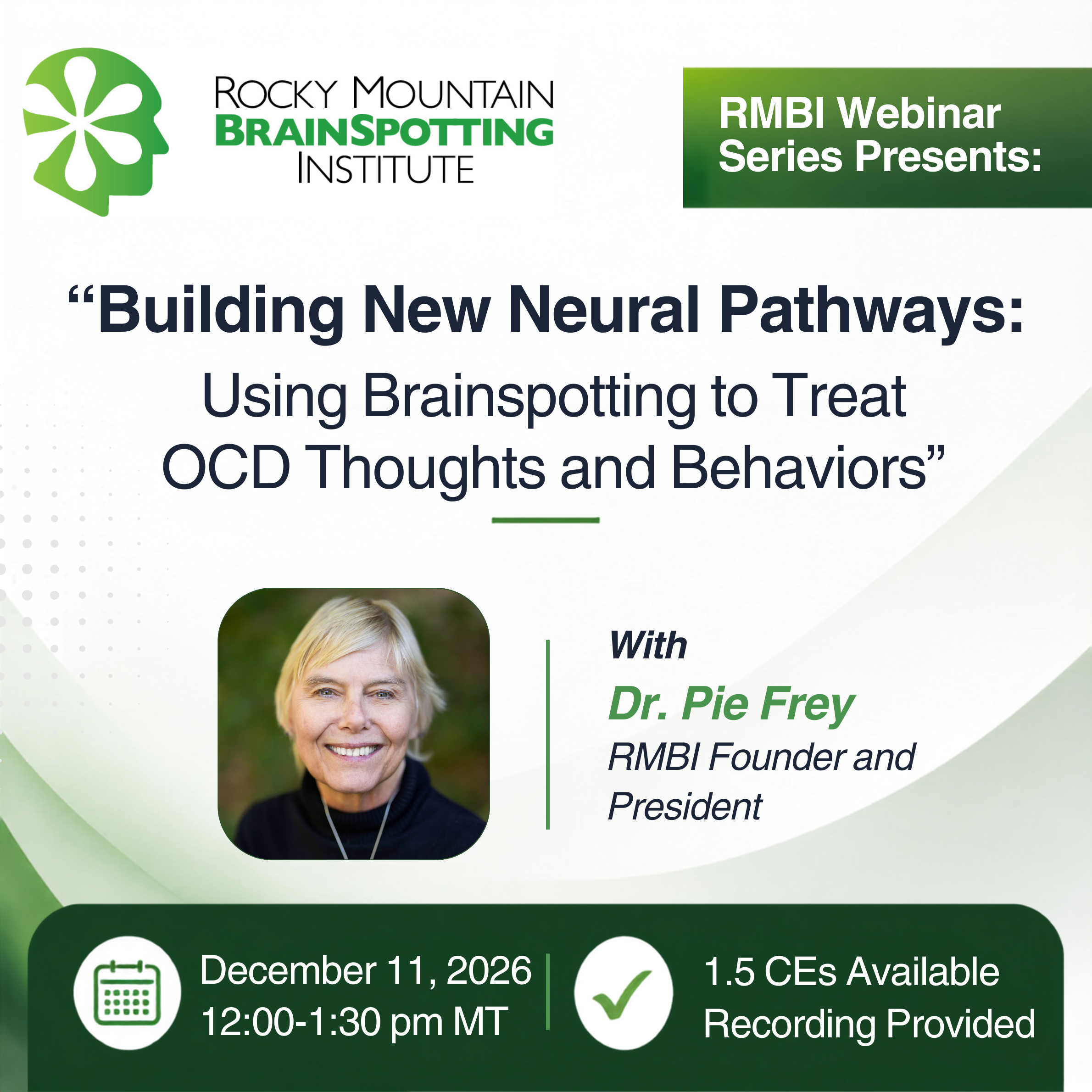
Building New Neural Pathways: Using Brainspotting to Treat OCD Thoughts and Behaviors
“Building New Neural Pathways: Using Brainspotting to Treat OCD Thoughts and Behaviors” with Dr. Pie Frey
December 11, 2026 from 12-1:30PM Mountain Time
1.5 CEs Available; Recording Provided
This introductory course presents a Brainspotting framework for working with obsessive-compulsive thoughts and behaviors. Participants will learn how to set up 3 brain spots from the OCD set-up. The goal is for the client to be able to use the 3 brain spots on their own in order to stop any looping thoughts. There are ways to help clients develop new neural pathways, build self-regulation skills, and practice Brainspotting techniques between therapy sessions. The OCD Brainspotting framework is a more directive approach than a traditional Brainspotting session. It is therapist-led, with a structured, focused approach designed to guide the client through the OCD framework.
Upon completion, participants will be able to:
- Understand the OCD brain and looping thoughts.
- Understand the rationale for the three-brainspot set-ups.
- Learn and practice each of the three Brainspots.
- Teach clients to use the set up between sessions.
Pie Frey, PsyD
Dr. Pie Frey is a Senior Brainspotting Trainer and has been training Brainspotting therapists since 2009. She has assisted Dr. David Grand, developer of Brainspotting, in numerous workshops and intensive trainings and has trained thousands of clinicians throughout the United States and Canada. Dr. David Grand coined Pie as the Grandmother of Brainspotting!
Dr. Frey developed a Brainspotting framework for addressing obsessive-compulsive symptoms that is now used internationally. She is the founder and president of the Rocky Mountain Brainspotting Institute, a Colorado nonprofit dedicated to Brainspotting education and scholarship opportunities.
A psychotherapist in private practice in Boulder, Colorado, Dr. Frey has worked in mental health since 1982, specializing in trauma, addictions, anxiety, mood disorders, traumatic brain injury, and performance enhancement.